NEW
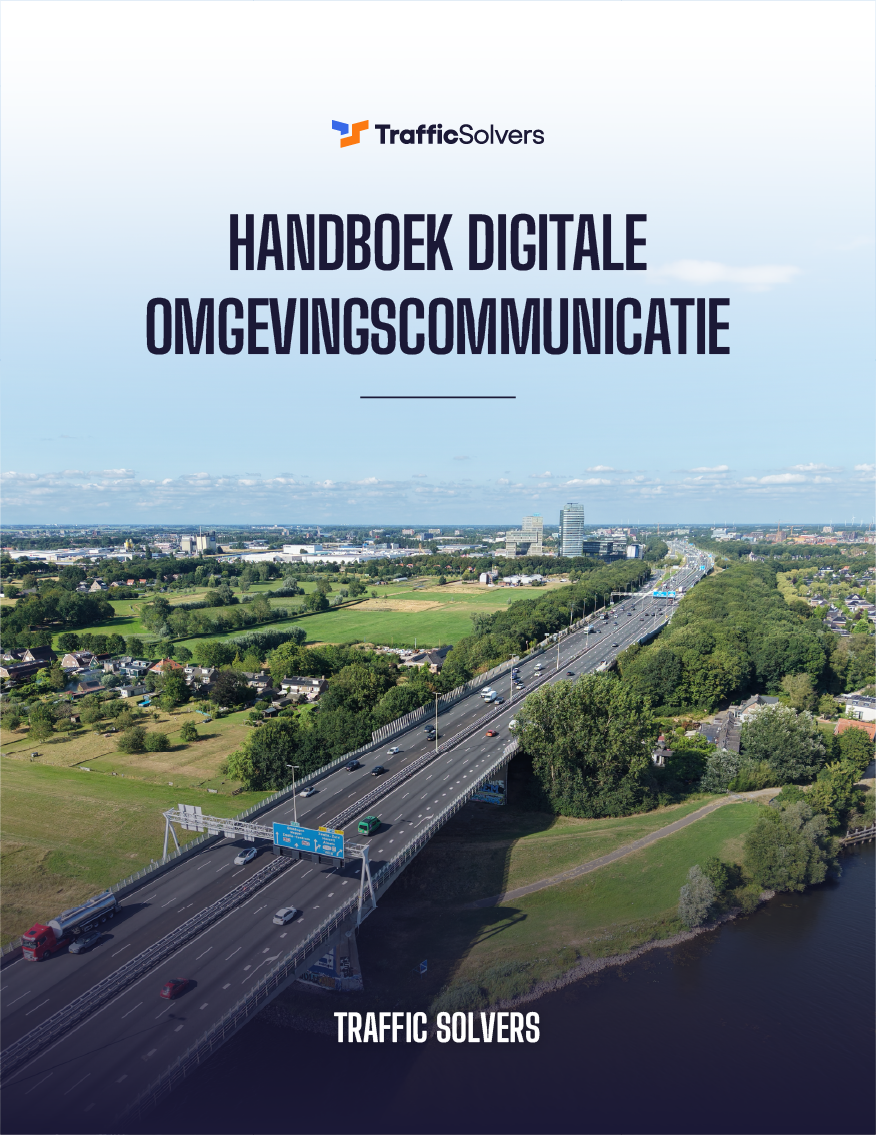
Handbook on Digital Environmental Communication
Pre-order now and receive it from October 8:
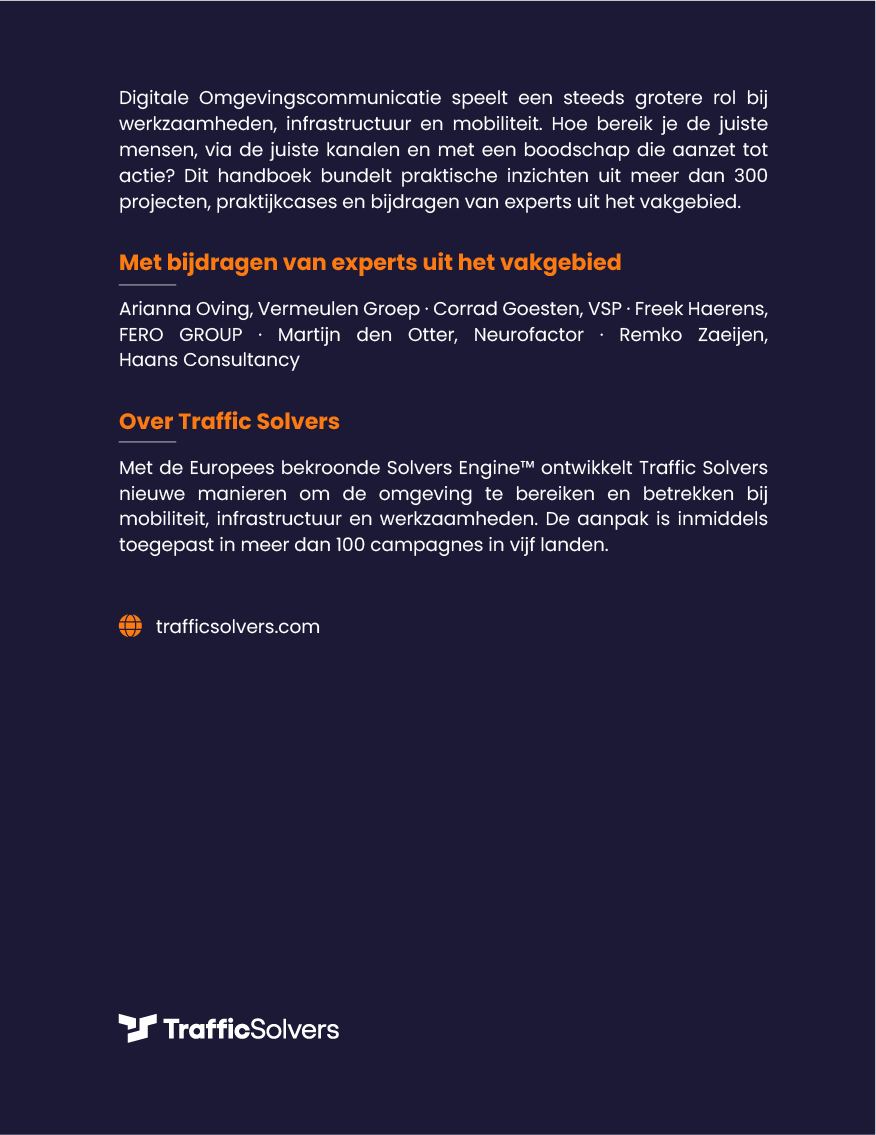
In this handbook, we share insights and experiences from more than 300 projects, supplemented with case studies, contributions from experts, and immediately applicable tools.
- Practical knowledge and tools
- Insights from 300+ projects
- With contributions from experts in the field

What you will discover in this book
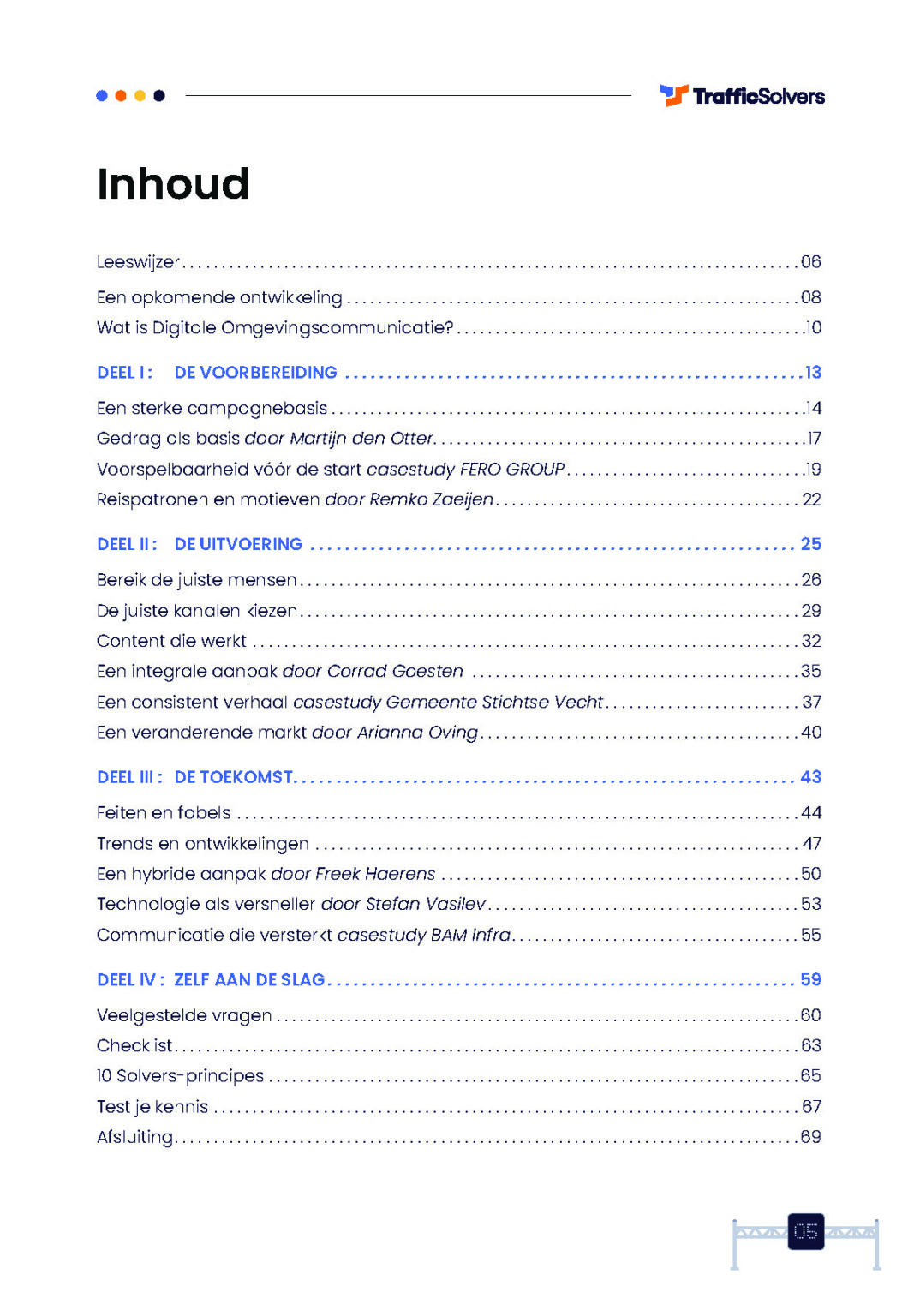
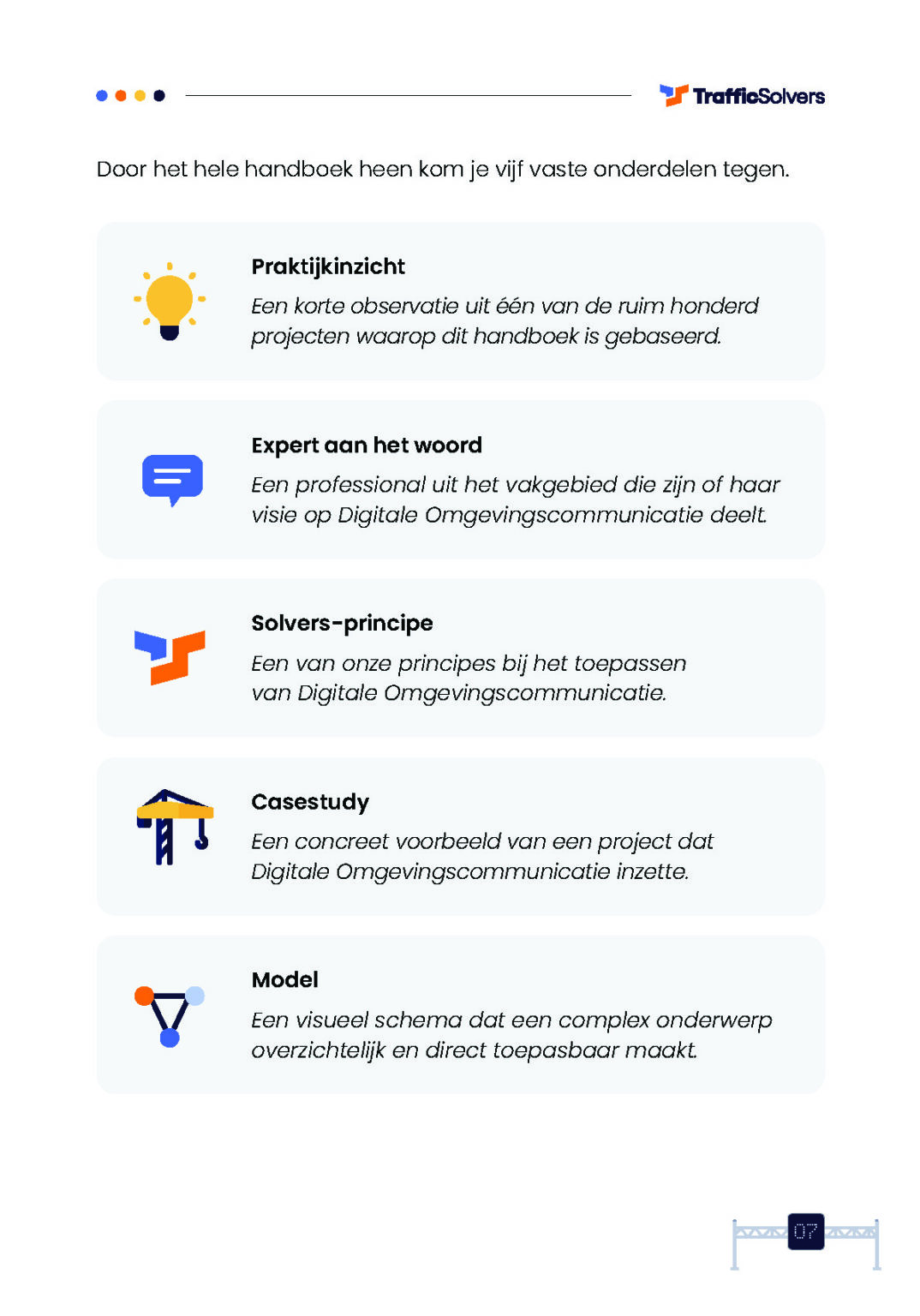
- A strong campaign foundation with clear goals, a thorough stakeholder analysis, and the right preparation before the first communication goes live.
- Understand target groups, behavior, and travel motives to better align communication with who you want to reach and what you ask of them.
- Reaching the right people and channels by consciously choosing where, when, and via which digital channels you inform different target groups.
- Create content that informs clearly, is relatable, and gives people a clear course of action to adjust their travel behavior where necessary.
- Case studies and insights from experts across various disciplines, with lessons learned from real projects related to work activities, accessibility, and communication.
- The 10 Solvers Principles, in which the key lessons from the handbook come together as a practical guide for your own projects.
With guest contributions from six experts in the field

Arianna Oving
Vermeulen Group
Collaboration between client, contractor, and the environment.

Corrad Goesten
VSP
The role of environmental management in effective communication.

Freek Haerens
FERO GROUP
How communication and signage contribute to safety together.

Iben van de Beek
Haans Consultancy
Travel patterns, travel motives, and the interests behind a trip.

Martijn den Otter
Neurofactor
Why behavior and our brain determine whether communication works.

Remko Zaeijen
Haans Consultancy
Travel patterns, travel motives, and the interests behind a trip.
What do you learn?
Digital environmental communication requires more than choosing the right channels. This handbook shows how to work from the target audience and behavior to create communication that reaches, informs, and helps people to act.
Every target group has different information needs. Discover how to tailor communication to residents, commuters, entrepreneurs, and other stakeholders.
Discover how to effectively define the communication area and reach commuters, visitors, and other relevant target groups.
Not every channel has the same role. Discover how to smartly combine different communication channels into one effective strategy.
Good content not only informs, but also helps people make better choices. Learn how to translate complex project information into clear messages.
Ten practical principles you can apply immediately. A compact summary of the key insights from the handbook.
After reading, take the Digital Environmental Communication knowledge test. You will receive a certificate of participation upon successful completion.
FAQ
Frequently asked questions
How much does the handbook cost?
Nothing at all! You can request a printed copy free of charge. We value sharing knowledge and practical experience, thereby contributing to the further development of Digital Environmental Communication.
Please note that the first edition is limited.
Who is this handbook intended for?
For professionals working on mobility, infrastructure, and public space, including road managers, contractors, consultancy and engineering firms, and communication and environmental professionals.
What can I expect from the handbook?
Practical insights into target audience, behavior, reach, channels, content, and technology, supplemented with case studies, contributions from experts, and the 10 Solvers Principles.
How do I receive the handbook?
Leave your details on this page to request a printed copy. You will receive a confirmation from us after your request.
Can I share the handbook with colleagues?
Yes, please do. We only ask that you do not republish the handbook or distribute it commercially.
Why did you create this handbook?
Digital Environmental Communication is evolving rapidly. With this handbook, we aim to consolidate practical experiences and provide professionals with concrete tools to further improve communication regarding mobility and infrastructure.